

Ammonia Urea And Uric Acid
| |||
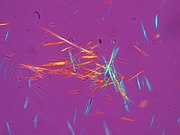 Crystals of urate in polarized calorie-free | |||
| Names | |||
|---|---|---|---|
| Preferred IUPAC name vii,nine-Dihydro-1H-purine-2,6,8(threeH)-trione | |||
| Other names 2,6,8-Trioxypurine; 2,vi,8-Trihydroxypurine; 2,half dozen,8-Trioxopurine; 1H-Purine-2,6,8-trione | |||
| Identifiers | |||
| CAS Number |
| ||
| 3D model (JSmol) |
| ||
| 3DMet |
| ||
| Beilstein Reference | 156158 | ||
| ChEBI |
| ||
| ChEMBL |
| ||
| ChemSpider |
| ||
| DrugBank |
| ||
| ECHA InfoCard | 100.000.655 | ||
| EC Number |
| ||
| IUPHAR/BPS |
| ||
| KEGG |
| ||
| MeSH | Uric+Acid | ||
| PubChem CID |
| ||
| UNII |
| ||
| CompTox Dashboard (EPA) |
| ||
| InChI
| |||
| SMILES
| |||
| Properties | |||
| Chemic formula | C 5 H 4 N 4 O three | ||
| Molar mass | 168.112 g·mol−1 | ||
| Appearance | White crystals | ||
| Melting signal | 300 °C (572 °F; 573 Chiliad) | ||
| Solubility in water | 6 mg/100 mL (at 20 °C) | ||
| log P | −1.107 | ||
| Acidity (pK a) | 5.6 | ||
| Basicity (pK b) | viii.4 | ||
| Magnetic susceptibility (χ) | −half-dozen.62×10−v cmiii mol−1 | ||
| Thermochemistry | |||
| Heat capacity (C) | 166.fifteen J Chiliad−1 mol−1 (at 24.0 °C) | ||
| Std tooth | 173.2 J Yard−1 mol−1 | ||
| Std enthalpy of | −619.69 to −617.93 kJ mol−ane | ||
| Std enthalpy of | −1921.2 to −1919.56 kJ mol−1 | ||
| Except where otherwise noted, data are given for materials in their standard state (at 25 °C [77 °F], 100 kPa). Infobox references | |||

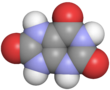


Uric acid is a heterocyclic compound of carbon, nitrogen, oxygen, and hydrogen with the formula C5H4N4O3. It forms ions and salts known every bit urates and acid urates, such every bit ammonium acid urate. Uric acrid is a product of the metabolic breakdown of purine nucleotides, and it is a normal component of urine. High blood concentrations of uric acrid can atomic number 82 to gout and are associated with other medical atmospheric condition, including diabetes and the formation of ammonium acid urate kidney stones.
Chemical science [edit]
Uric acid was first isolated from kidney stones in 1776 by Swedish chemist Carl Wilhelm Scheele.[one] In 1882, the Ukrainian chemist Ivan Horbaczewski kickoff synthesized uric acid by melting urea with glycine.[2]
Uric acid displays lactam–lactim tautomerism (likewise often described equally keto–enol tautomerism[three]). Although the lactim grade is expected to possess some degree of aromaticity, uric acid crystallizes in the lactam form,[4] with computational chemistry as well indicating that tautomer to be the about stable.[5] Uric acid is a diprotic acrid with pYard a1 = 5.four and pOne thousand a2 = ten.3,[half dozen] thus at physiological pH, information technology predominately exists every bit the monoionic urate ion.
-
Tautomers of uric acrid and urate 


pK a1

Lactam class Lactim form Urate ion
Water solubility [edit]
In full general, the water solubility of uric acid and its brine metal and alkaline earth salts is rather low. All these salts exhibit greater solubility in hot water than cold, allowing for like shooting fish in a barrel recrystallization. This low solubility is significant for the etiology of gout. The solubility of the acid and its salts in ethanol is very low or negligible. In ethanol/water mixtures, the solubilities are somewhere between the end values for pure ethanol and pure h2o.
-
Solubility of urate salts (grams of h2o per gram of compound) Compound Cold h2o Boiling h2o Uric acid 15,000 2,000 Ammonium hydrogen urate — 1,600 Lithium hydrogen urate 370 39 Sodium hydrogen urate ane,175 124 Potassium hydrogen urate 790 75 Magnesium dihydrogen diurate 3,750 160 Calcium dihydrogen diurate 603 276 Disodium urate 77 — Dipotassium urate 44 35 Calcium urate ane,500 1,440 Strontium urate 4,300 i,790 Barium urate 7,900 2,700
The figures given indicate what mass of water is required to dissolve a unit mass of compound indicated. The lower the number, the more soluble the substance in the said solvent.[seven] [eight] [9]
Biochemistry [edit]
Xanthine oxidase (found in mammals primarily equally xanthine dehydrogenase and rarely as an oxidase[10]) is an enzyme which catalyzes the germination of uric acrid from xanthine and hypoxanthine, which in turn are produced from other purines. Xanthine oxidase is a large enzyme whose active site consists of the metal molybdenum bound to sulfur and oxygen.[11] Inside cells, xanthine oxidase tin can be as xanthine dehydrogenase and xanthine oxireductase, which has also been purified from bovine milk and spleen extracts.[12] Uric acrid is released in hypoxic conditions (depression oxygen saturation).[13]
Genetic and physiological variety [edit]
Primates [edit]
In humans and other great apes, uric acid (actually hydrogen urate ion) is the concluding oxidation (breakdown) product of purine metabolism and is excreted in urine, whereas in most other mammals, the enzyme uricase further oxidizes uric acid to allantoin.[14] The loss of uricase in higher primates parallels the similar loss of the ability to synthesize ascorbic acid, leading to the suggestion that urate may partially substitute for ascorbate in such species.[fifteen] Both uric acid and ascorbic acid are strong reducing agents (electron donors) and potent antioxidants. In humans, over half the antioxidant capacity of blood plasma comes from hydrogen urate ion.[16]
Humans [edit]
The normal concentration range of uric acid (or hydrogen urate ion) in human blood is 25 to 80 mg/L for men and 15 to sixty mg/L for women[17] (simply see beneath for slightly different values). An individual tin can take serum values as high as 96 mg/L and not have gout.[18] In humans, about 70% of daily uric acid disposal occurs via the kidneys, and in 5–25% of humans, dumb renal (kidney) excretion leads to hyperuricemia.[xix] Normal excretion of uric acid in the urine is 270 to 360 mg per day (concentration of 270 to 360 mg/Fifty if one litre of urine is produced per day – higher than the solubility of uric acrid because it is in the grade of dissolved acrid urates), roughly one% every bit much every bit the daily excretion of urea.[twenty]
Dogs [edit]
The Dalmatian has a genetic defect in uric acrid uptake by the liver and kidneys, resulting in decreased conversion to allantoin, so this breed excretes uric acrid, and not allantoin, in the urine.[21]
Birds and reptiles [edit]
In birds and reptiles, and in some desert-dwelling mammals (such as the kangaroo rat), uric acid also is the finish product of purine metabolism, but it is excreted in feces as a dry mass. This involves a circuitous metabolic pathway that is energetically costly in comparison to processing of other nitrogenous wastes such equally urea (from the urea cycle) or ammonia, simply has the advantages of reducing h2o loss and preventing aridity.[22]
Invertebrates [edit]
Platynereis dumerilii, a marine polychaete worm, uses uric acid as a sexual pheromone. The female of the species releases uric acrid into the h2o during mating, to induce males to release sperm.[23]
Genetics [edit]
Although foods such as meat and seafood tin elevate serum urate levels, genetic variation is a much greater correspondent to high serum urate.[24] [25] A proportion of people have mutations in the urate transport proteins responsible for the excretion of uric acrid by the kidneys. Variants of a number of genes, linked to serum urate, have so far been identified: SLC2A9; ABCG2; SLC17A1; SLC22A11; SLC22A12; SLC16A9; GCKR; LRRC16A; and PDZK1.[26] [27] [28] GLUT9, encoded by the SLC2A9 gene, is known to send both uric acid and fructose.[19] [29] [xxx]
Clinical significance and research [edit]
In homo blood plasma, the reference range of uric acid is typically 3.4–7.2 mg per 100 mL(200–430 μmol/L) for men, and 2.iv–6.1 mg per 100 mL for women (140–360 μmol/L).[31] Uric acid concentrations in blood plasma above and below the normal range are known as, respectively, hyperuricemia and hypouricemia. Likewise, uric acid concentrations in urine above and below normal are known every bit hyperuricosuria and hypouricosuria. Uric acid levels in saliva may be associated with blood uric acrid levels.[32]
High uric acrid [edit]
Hyperuricemia (loftier levels of uric acid), which induces gout, has various potential origins:
- Diet may exist a factor. High intake of dietary purine, loftier-fructose corn syrup, and sucrose can increase levels of uric acid.[33] [34]
- Serum uric acid can be elevated past reduced excretion via the kidneys.[35]
- Fasting or rapid weight loss can temporarily drag uric acid levels.[36]
- Sure drugs, such as thiazide diuretics, tin increase claret uric acid levels past interfering with renal clearance.[37]
- Tumor lysis syndrome, a metabolic complication of certain cancers or chemotherapy, due to nucleobase and potassium release into the plasma.[38]
Gout [edit]
A 2011 survey in the United States indicated that three.9% of the population had gout, whereas 21.four% had hyperuricemia without having symptoms.[39]
Backlog blood uric acid tin can induce gout,[40] a painful condition resulting from needle-similar crystals of uric acid precipitating in joints, capillaries, skin, and other tissues.[41] Gout can occur where serum uric acid levels are as depression as 6 mg per 100 mL (357 μmol/Fifty), but an private can have serum values as loftier as 9.6 mg per 100 mL (565 μmol/L) and not have gout.[eighteen]
In humans, purines are metabolized into uric acid, which is then excreted in the urine. Consumption of large amounts of some types of purine-rich foods, particularly meat and seafood, increases gout risk.[42] Purine-rich foods include liver, kidney, and sweetbreads, and certain types of seafood, including anchovies, herring, sardines, mussels, scallops, trout, haddock, mackerel, and tuna.[43] Moderate intake of purine-rich vegetables, all the same, is not associated with an increased risk of gout.[42]
One treatment for gout in the 19th century was administration of lithium salts;[44] lithium urate is more than soluble. Today, inflammation during attacks is more commonly treated with NSAIDs, colchicine, or corticosteroids, and urate levels are managed with allopurinol.[45] Allopurinol, which weakly inhibits xanthine oxidase, is an analog of hypoxanthine that is hydroxylated by xanthine oxidoreductase at the 2-position to give oxipurinol.[46]
Tumor lysis syndrome [edit]
Tumor lysis syndrome, an emergency condition that may result from blood cancers, produces high uric acid levels in blood when tumor cells release their contents into the claret, either spontaneously or post-obit chemotherapy.[38] Tumor lysis syndrome may atomic number 82 to acute kidney injury when uric acid crystals are deposited in the kidneys.[38] Treatment includes hyperhydration to dilute and excrete uric acrid via urine, rasburicase to reduce levels of poorly soluble uric acrid in blood, or allopurinol to inhibit purine catabolism from adding to uric acid levels.[38]
Lesch–Nyhan syndrome [edit]
Lesch–Nyhan syndrome, a rare inherited disorder, is as well associated with loftier serum uric acid levels.[47] Spasticity, involuntary motion, and cognitive retardation as well every bit manifestations of gout are seen in this syndrome.[48]
Cardiovascular disease [edit]
Hyperuricemia is associated with an increment in risk factors for cardiovascular affliction.[49] It is as well possible that high levels of uric acrid may have a causal role in the evolution of atherosclerotic cardiovascular disease, simply this is controversial and the data are conflicting.[50]
Blazon ii diabetes [edit]
Hyperuricemia may be a upshot of insulin resistance in diabetes rather than its precursor.[51] Ane study showed high serum uric acid was associated with higher risk of type 2 diabetes, independent of obesity, dyslipidemia, and hypertension.[52] Hyperuricemia is associated with components of metabolic syndrome, including in children.[53] [54]
Uric acrid rock germination [edit]
Kidney stones can form through deposits of sodium urate microcrystals.[55] [56]
Saturation levels of uric acid in blood may consequence in i form of kidney stones when the urate crystallizes in the kidney. These uric acrid stones are radiolucent, so do not announced on an intestinal apparently X-ray.[57] Uric acid crystals tin also promote the formation of calcium oxalate stones, acting every bit "seed crystals".[58]
Depression uric acid [edit]
Low uric acid (hypouricemia) can take numerous causes. Low dietary zinc intakes cause lower uric acid levels. This issue tin be even more pronounced in women taking oral contraceptive medication.[59] Sevelamer, a drug indicated for prevention of hyperphosphataemia in people with chronic kidney failure, can significantly reduce serum uric acid.[60]
Multiple sclerosis [edit]
Meta-analysis of 10 case-command studies plant that the serum uric acid levels of patients with multiple sclerosis were significantly lower compared to those of salubrious controls, perchance indicating a diagnostic biomarker for multiple sclerosis.[61]
Normalizing low uric acid [edit]
Correcting low or deficient zinc levels can assistance drag serum uric acid.[62]
See also [edit]
- Theacrine or 1,3,7,9-tetramethyluric acrid, a purine alkaloid found in some teas
- Uracil – purine nucleobase named by Robert Behrend who was attempting to synthesize derivatives of uric acid
References [edit]
- ^ Scheele, C. W. (1776). "Examen Chemicum Calculi Urinari" [A chemic examiniation of kidney stones]. Opuscula. 2: 73.
- ^ Horbaczewski, J. (1882). "Synthese der Harnsäure" [Synthesis of uric acid]. Monatshefte für Chemie und Verwandte Teile Anderer Wissenschaften. 3: 796–797. doi:ten.1007/BF01516847. S2CID 92323943.
- ^ Lieberman, One thousand.; Marks, A. D.; Smith, C. M.; Marks, D. B. (2007). Marks' Essential Medical Biochemistry . Philadelphia: Lippincott Williams & Wilkins. pp. 47–. ISBN978-0-7817-9340-7.
- ^ Ringertz, H. (1 March 1966). "The molecular and crystal structure of uric acid". Acta Crystallographica. 20 (iii): 397–403. doi:10.1107/S0365110X66000914.
- ^ Jiménez, V.; Alderete, J. B. (Nov 2005). "Theoretical calculations on the tautomerism of uric acid in gas phase and aqueous solution". Journal of Molecular Construction: THEOCHEM. 755 (1–iii): 209–214. doi:10.1016/j.theochem.2005.08.001.
- ^ McCrudden, F. H. (2008) [1905]. Uric Acid: The Chemistry, Physiology and Pathology of Uric Acid and the Physiologically Important Purin Bodies, with a Give-and-take of the Metabolism in Gout. Charleston, SC: BiblioBazaar. ISBN978-0-554-61991-0.
- ^ Weast, R. C., ed. (1981). CRC Handbook of Chemical science and Physics (62nd ed.). Boca Raton, FL: CRC Press. OCLC 7842683.
- ^ Windholz, One thousand., ed. (1976). Merck Index (ninth ed.). Merck. ISBN978-0-911910-26-1.
- ^ McCrudden, Francis H. Uric acrid. p. 58.
- ^ Ichida, One thousand.; Amaya, Y.; Noda, K.; Minoshima, S.; Hosoya, T.; Sakai, O.; Shimizu, N.; Nishino, T. (Nov 1993). "Cloning of the cDNA encoding human being xanthine dehydrogenase (oxidase): Structural analysis of the poly peptide and chromosomal location of the factor". Gene. 133 (2): 279–284. doi:ten.1016/0378-1119(93)90652-J. PMID 8224915.
- ^ Hille, R. (2005). "Molybdenum-containing hydroxylases". Athenaeum of Biochemistry and Biophysics. 433 (one): 107–116. doi:10.1016/j.abb.2004.08.012. PMID 15581570.
- ^ Hori, Northward.; Uehara, Yard.; Mikami, Y. (1992). "Enzymatic Synthesis of v-Methyluridine from Adenosine and Thymine with Loftier Efficiency". Bioscience, Biotechnology, and Biochemistry. 56 (four): 580–582. doi:x.1271/bbb.56.580. PMID 27280651.
- ^ Baillie, J. K.; Bates, Yard. M.; Thompson, A. A.; Waring, W. S.; Partridge, R. W.; Schnopp, M. F.; Simpson, A.; Gulliver-Sloan, F.; Maxwell, S. R.; Webb, D. J. (May 2007). "Endogenous urate production augments plasma antioxidant capacity in healthy lowland subjects exposed to high distance". Chest. 131 (five): 1473–1478. doi:ten.1378/breast.06-2235. PMID 17494796.
- ^ Angstadt, C. Due north. (4 December 1997). "Purine and Pyrimidine Metabolism: Purine Catabolism". NetBiochem.
- ^ Proctor, P. (November 1970). "Similar functions of uric acid and ascorbate in man?". Nature. 228 (5274): 868. Bibcode:1970Natur.228..868P. doi:10.1038/228868a0. PMID 5477017. S2CID 4146946.
- ^ Maxwell, S. R. J.; Thomason, H.; Sandler, D.; Leguen, C.; Baxter, M. A.; Thorpe, 1000. H. G.; Jones, A. F.; Barnett, A. H. (1997). "Antioxidant status in patients with elementary insulin-dependent and not-insulin-dependent diabetes mellitus". European Journal of Clinical Investigation. 27 (half-dozen): 484–490. doi:ten.1046/j.1365-2362.1997.1390687.x. PMID 9229228. S2CID 11773699.
- ^ Braunwald, E., ed. (1987). Harrison's Principles of Internal Medicine (11th ed.). New York: McGraw-Loma. p. A-3. ISBN978-0-07-079454-2.
- ^ a b Tausche, A. Grand.; Unger, S.; Richter, Grand.; et al. (May 2006). "Hyperurikämie und Gicht" [Hyperuricemia and gout: diagnosis and therapy]. Der Internist (in German language). 47 (5): 509–521. doi:ten.1007/s00108-006-1578-y. PMID 16586130. S2CID 11480796.
- ^ a b Vitart, V.; Rudan, I.; Hayward, C.; et al. (Apr 2008). "SLC2A9 is a newly identified urate transporter influencing serum urate concentration, urate excretion and gout". Nature Genetics. 40 (4): 437–442. doi:10.1038/ng.106. PMID 18327257. S2CID 6720464.
- ^ "Hyperuricosuria". StatPearls. StatPearls. 2022. PMID 32965872.
- ^ Friedman, M. & Byers, S. O. (1 September 1948). "Observations apropos the causes of the backlog excretion of uric acid in the Dalmatian dog". The Journal of Biological Chemistry. 175 (2): 727–735. doi:10.1016/S0021-9258(18)57191-X. PMID 18880769.
- ^ Hazard, L. C. (2004). Sodium and Potassium Secretion by Iguana Salt Glands. Iguanas: Biological science and Conservation. University of California Press. pp. 84–85. ISBN978-0-520-23854-1.
- ^ Zeeck, E.; Harder, T.; Beckmann, Chiliad. (1998). "Uric acid: the sperm-release pheromone of the marine polychaete Platynereis dumerilii". Journal of Chemical Ecology. 24 (i): thirteen–22. doi:10.1023/A:1022328610423. S2CID 42318049.
- ^ Major, T. J.; Topless, R. K.; Merriman, T. R. (2018). "Evaluation of the diet wide contribution to serum urate levels: meta-analysis of population based cohorts". The BMJ. 363: k3951. doi:10.1136/bmj.k3951. PMC6174725. PMID 30305269.
- ^ Keenan, R. T. (2020). "The biology of urate". Seminars in Arthritis and Rheumatism. 50 (35): S2–S10. doi:ten.4103/bc.bc_1_19. PMC6611195. PMID 32620198.
- ^ Aringer, Thou.; Graessler, J. (Dec 2008). "Understanding scarce elimination of uric acid". Lancet. 372 (9654): 1929–1930. doi:10.1016/S0140-6736(08)61344-six. PMID 18834627. S2CID 1839089.
- ^ Kolz, 1000.; Johnson, T.; et al. (June 2009). Allison, David B. (ed.). "Meta-assay of 28,141 individuals identifies common variants within five new loci that influence uric acid concentrations". PLOS Genet. 5 (half-dozen): e1000504. doi:10.1371/journal.pgen.1000504. PMC2683940. PMID 19503597.
- ^ Köttgen, A.; et al. (February 2013). "Genome-wide association analyses identify xviii new loci associated with serum urate concentrations" (PDF). Nature Genetics. 45 (two): 145–154. doi:10.1038/ng.2500. PMC3663712. PMID 23263486.
- ^ Döring, A.; Gieger, C.; Mehta, D.; et al. (April 2008). "SLC2A9 influences uric acid concentrations with pronounced sex activity-specific effects". Nature Genetics. forty (4): 430–436. doi:10.1038/ng.107. PMID 18327256. S2CID 29751482.
- ^ Mandal, Asim K.; Mount, David B. (Feb 2015). "The molecular physiology of uric acid homeostasis". Annual Review of Physiology. 77: 323–345. doi:10.1146/annurev-physiol-021113-170343. PMID 25422986.
- ^ "Harmonisation of Reference Intervals" (PDF). Pathology Harmony (UK). Archived from the original (PDF) on two August 2013. Retrieved 13 August 2013.
- ^ Zhao, J; Huang, Y (2015). "Salivary uric acrid as a noninvasive biomarker for monitoring the efficacy of urate-lowering therapy in a patient with chronic gouty arthropathy". Clinica Chimica Acta. 450: 115–20. doi:10.1016/j.cca.2015.08.005. PMID 26276048.
- ^ Cirillo, P.; Sato, W.; Reungjui, S.; et al. (Dec 2006). "Uric acid, the metabolic syndrome, and renal disease" (PDF). Journal of the American Order of Nephrology. 17 (12 Suppl. 3): S165–S168. doi:10.1681/ASN.2006080909. PMID 17130256.
- ^ Angelopoulos, T. J.; Lowndes, J.; Zukley, L.; Melanson, K. J.; Nguyen, Five.; Huffman, A.; Rippe, J. One thousand. (June 2009). "The Effect of High-Fructose Corn Syrup Consumption on Triglycerides and Uric Acid". The Journal of Nutrition. 139 (six): 1242S–1245S. doi:ten.3945/jn.108.098194. PMID 19403709.
- ^ "High uric acid level". Mayo Dispensary. 11 September 2010. Retrieved 24 April 2011.
- ^ Howard, A. Northward. (1981). "The historical evolution, efficacy and safety of very-low-calorie diets". International Journal of Obesity. v (3): 195–208. PMID 7024153.
- ^ "Diuretic-Related Side Effects: Evolution and Treatment". Medscape. Retrieved 17 May 2013.
- ^ a b c d Howard, S. C.; Jones, D. P.; Pui, C.-H. (12 May 2011). "The Tumor Lysis Syndrome". The New England Journal of Medicine. 364 (xix): 1844–1854. doi:x.1056/NEJMra0904569. ISSN 0028-4793. PMC3437249. PMID 21561350.
- ^ Li, R.; Yu, K.; Li, C. (2018). "Dietary factors and risk of gout and hyperuricemia: a meta-analysis and systematic review". Asia Pacific Periodical of Clinical Diet. 27 (vi): 1344–1356. doi:x.6133/apjcn.201811_27(6).0022. PMID 30485934.
- ^ Heinig, 1000.; Johnson, R. J. (December 2006). "Function of uric acid in hypertension, renal affliction, and metabolic syndrome". Cleveland Clinic Periodical of Medicine. 73 (12): 1059–1064. doi:10.3949/ccjm.73.12.1059. PMID 17190309. S2CID 45409308.
- ^ Richette, P.; Bardin, T. (January 2010). "Gout". Lancet. 375 (9711): 318–328. doi:10.1016/S0140-6736(09)60883-seven. PMID 19692116. S2CID 208793280.
- ^ a b Choi, H. Chiliad.; Atkinson, K.; Karlson, Eastward. W.; Willett, W.; Curhan, G. (March 2004). "Purine-rich foods, dairy and poly peptide intake, and the risk of gout in men". The New England Journal of Medicine. 350 (xi): 1093–1103. doi:x.1056/NEJMoa035700. PMID 15014182.
- ^ "Gout diet: What's allowed, what'due south non". Mayo Clinic. 2 July 2020.
{{cite web}}: CS1 maint: url-status (link) - ^ Schrauzer, Gerhard N. (2002). "Lithium: Occurrence, Dietary Intakes, Nutritional Essentiality". Journal of the American College of Nutrition. 21 (1): fourteen–21. doi:10.1080/07315724.2002.10719188. PMID 11838882. S2CID 25752882.
- ^ "NHS Clinical Knowledge Summaries". UK National Wellness Service. Archived from the original on 4 March 2012.
- ^ Pacher, P.; Nivorozhkin, A.; Szabó, C. (2006). "Therapeutic effects of xanthine oxidase inhibitors: Renaissance one-half a century subsequently the discovery of allopurinol". Pharmacological Reviews. 58 (1): 87–114. doi:ten.1124/pr.58.1.vi. PMC2233605. PMID 16507884.
- ^ Luo, Y. C.; Do, J. S.; Liu, C. C. (October 2006). "An amperometric uric acid biosensor based on modified Ir–C electrode". Biosensors & Bioelectronics. 22 (4): 482–488. doi:10.1016/j.bios.2006.07.013. PMID 16908130.
- ^ Nyhan, W. L. (March 2005). "Lesch-Nyhan Disease". Periodical of the History of the Neurosciences. xiv (1): 1–10. doi:ten.1080/096470490512490. PMID 15804753. S2CID 37934468.
- ^ Borghi, C.; Verardi, F. M.; Pareo, I.; Bentivenga, C.; Cicero, A. F. (2014). "Hyperuricemia and cardiovascular disease risk". Expert Review of Cardiovascular Therapy. 12 (10): 1219–1225. doi:10.1586/14779072.2014.957675. PMID 25192804. S2CID 42023170.
- ^ Saito, Yuichi; Tanaka, Atsushi; Node, Koichi; Kobayashi, Yoshio (July 2021). "Uric acid and cardiovascular disease: A clinical review". Journal of Cardiology. 78 (1): 51–57. doi:10.1016/j.jjcc.2020.12.013. ISSN 1876-4738. PMID 33388217.
- ^ Cappuccio, F. P.; Strazzullo, P.; Farinaro, Due east.; Trevisan, K. (July 1993). "Uric acrid metabolism and tubular sodium treatment. Results from a population-based study". Journal of the American Medical Clan. 270 (3): 354–359. doi:x.1001/jama.270.3.354. PMID 8315780.
- ^ Dehghan, A.; van Hoek, M.; Sijbrands E. J., Hofman A.; Witteman, J. C. (February 2008). "High serum uric acid as a novel risk factor for blazon 2 diabetes". Diabetes Care. 31 (2): 361–362. doi:ten.2337/dc07-1276. PMID 17977935.
- ^ De Oliveira, East. P.; et al. (2012). "Loftier plasma uric acrid concentration: Causes and consequences". Diabetology & Metabolic Syndrome. iv: 12. doi:10.1186/1758-5996-iv-12. PMC3359272. PMID 22475652.
- ^ Wang, J. Y.; et al. (2012). "Predictive value of serum uric acid levels for the diagnosis of metabolic syndrome in adolescents". The Journal of Pediatrics. 161 (4): 753–6.e2. doi:10.1016/j.jpeds.2012.03.036. PMID 22575243.
- ^ Banach, Thousand.; Bojarska, E.; Kazimierczuk, Z.; Magnowska, Fifty.; Bzowska, A. (2005). "Kinetic Model of Oxidation Catalyzed by Xanthine Oxidase—The Concluding Enzyme in Degradation of Purine Nucleosides and Nucleotides". Nucleic Acids. 24 (five–vii): 465–469. doi:ten.1081/ncn-200060006. PMID 16247972. S2CID 42906456.
- ^ "What is Gout: What Causes Gout?". MedicalBug. half-dozen January 2012. Archived from the original on ii Apr 2019. Retrieved 6 May 2012.
- ^ Worcester, E. M.; Coe, F. L. (2008). "Nephrolithiasis". Primary Care: Clinics in Office Exercise. 35 (two): 369–391. doi:10.1016/j.popular.2008.01.005. PMC2518455. PMID 18486720.
- ^ Pak, C. Y. (September 2008). "Medical stone management: 35 years of advances". The Periodical of Urology. 180 (iii): 813–819. doi:ten.1016/j.juro.2008.05.048. PMID 18635234.
- ^ Hess, F. K.; King, J. C.; Margen, S. (1 December 1977). "Effect of low zinc intake and oral contraceptive agents on nitrogen utilization and clinical findings in young women". The Journal of Nutrition. 107 (12): 2219–2227. doi:10.1093/jn/107.12.2219. PMID 925768.
- ^ Garg, J. P.; Chasan-Taber, South.; Blair, A.; et al. (January 2005). "Effects of sevelamer and calcium-based phosphate binders on uric acid concentrations in patients undergoing hemodialysis: a randomized clinical trial". Arthritis and Rheumatism. 52 (i): 290–295. doi:10.1002/art.20781. PMID 15641045.
- ^ Wang, L.; Hu, W.; Wang, J.; Qian, Due west.; Xiao, H. (2016). "Low serum uric acid levels in patients with multiple sclerosis and neuromyelitis optica: An updated meta-assay". Multiple Sclerosis and Related Disorders. 9: 17–22. doi:10.1016/j.msard.2016.05.008. PMID 27645338.
- ^ Umeki, S.; Ohga, R.; Konishi, Y.; Yasuda, T.; Morimoto, Thousand.; Terao, A. (Nov 1986). "Oral zinc therapy normalizes serum uric acid level in Wilson'south disease patients". The American Periodical of the Medical Sciences. 292 (v): 289–292. doi:10.1097/00000441-198611000-00007. PMID 3777013. S2CID 39995735.
External links [edit]

Wikimedia Commons has media related to Uric acid.
- Uric acid blood test – MedlinePlus

Ammonia Urea And Uric Acid,
Source: https://en.wikipedia.org/wiki/Uric_acid
Posted by: williamsbrong1955.blogspot.com
0 Response to "Ammonia Urea And Uric Acid"
Post a Comment